






15 Days MORROCO TOUR From Casablanca City
OVERVIEW :
This 15-day itinerary offers a blend of fun activities and relaxation, perfect for families. Take photos in the “blue city” of Chefchaouen, taste traditional food with a cooking workshop in Fes, see Barbary apes in the Atlas Mountains, and ride camels in the Sahara Desert. Go shopping in the bustling markets of Marrakech and relax in a traditional hammam before hanging out with the kids on the beaches near Essaouira.
Day 1: Arrive in Casablanca
Fly into Casablanca‘s Mohammed V International Airport, where your driver will be waiting to meet you. The first settlement of Casablanca was the Berber village of Anfa. By the end of the 18th century, Sultan Mohammed Ben Abdallah founded a Muslim town at this site, where Europeans were welcome to have their commercial enterprises for wool and grain.
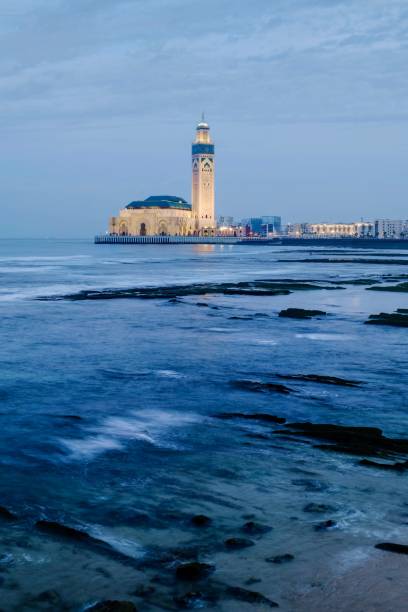
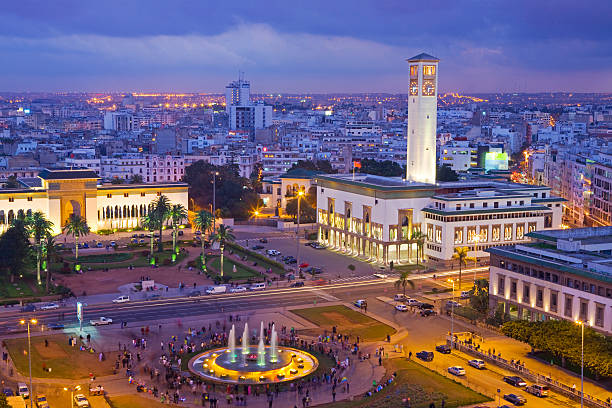
Get to know the history, culture, and economy of Casablanca by visiting a few different famous sights. Start with the United Nations Square and the Mohammed V Square, followed by the Central Market. Next, head to the Habous Quarter to enjoy the view of the Royal Palace before visiting the sizeable Hassan II Mosque, the second-largest functioning mosque in Africa and the seventh-largest in the world.
Day 2: See Rabat and the “Blue City” of Chefchaouen
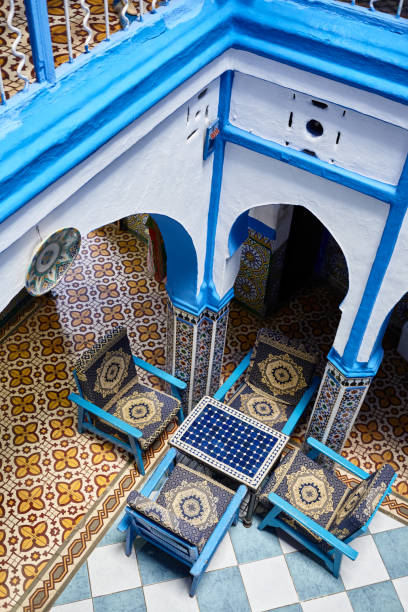
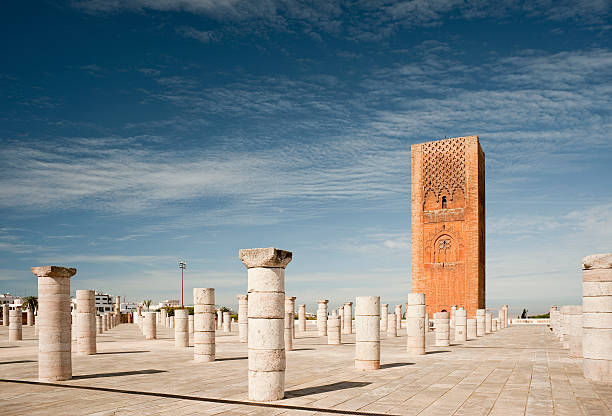
Continue to Rabat, Morocco’s present capital and one of its four historic capitals, known as the “imperial cities.” Rabat is a bustling city with several important sights and a rich history. Stroll through the Kasbah des Oudaias, see the famous Hassan Tower, and visit the Mausoleum of Mohammed V, where you can admire some excellent examples of traditional zellige tilework.
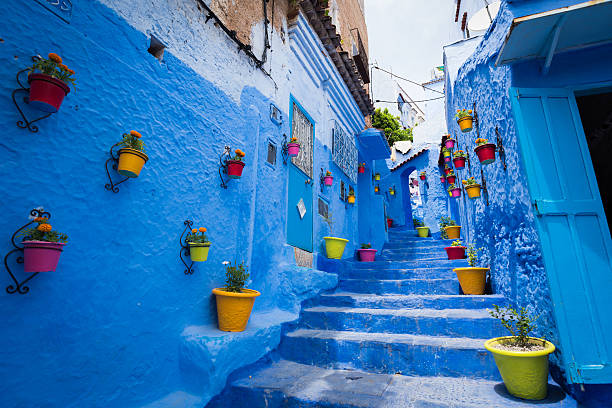
Then, drive further north to reach Chefchaouen, known as Morocco’s “Blue City.” Chefchaouen is a beautiful small town situated in the heart of the Rif Mountains in northeastern Morocco. The town was founded in 1471 to halt the southward expansion of the Portuguese and the Spanish. As you explore the medina (old town) with your family, enjoy its blue painted walls and take photos of the unique façades.
Day 3: Excursion to Akchour Waterfalls & Traditional Henna Tattoos
Today, explore the beauty of Chefchaouen province, and appreciate the scenery and stunning views of the Rif Mountains. Meet your local guide for some moderate hiking at Akchour Waterfalls in the morning. Then, return to Chefchaouen’s medina to enjoy lunch at a local family restaurant.
In the afternoon, spend some time getting henna tattoos. Moroccan henna is a well-known tradition that women of all ages practice. Women typically get intricate henna designs painted on their hands and feet during special occasions such as Moroccan weddings, holidays, and circumcisions. Men also sometimes get henna tattoos, traditionally in a darker color. Choose which members of your family would like to get henna—the others can use the opportunity to learn more about the surroundings, discussing local life and history with your guide.
Day 4: Transfer to Fes via the Roman ruins at Volubilis and Meknes
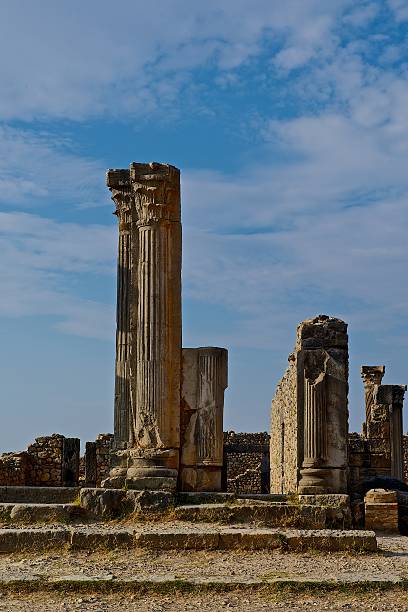
Get an early start today as you visit the Roman ruins at Volubilis. Volubilis is a UNESCO World Heritage Site that contains Morocco’s best-preserved Roman ruins and makes for a nice detour from the hustle and bustle of the big cities. Once your family has finished wandering around the ruins, continue to the small imperial city of Meknes to enjoy and explore its medina.
By the afternoon, you’ll reach Fes, founded shortly after the Arabs expanded across North Africa. Fes is often referred to as the spiritual capital of Morocco and was once one of the most important places of scholarship in the world. It can be neatly divided into three different parts: Fes el-Bali (the heart of the medina), Fes el-Jdid (where the Jewish Quarter and Royal Palace are located), and the Ville Nouvelle (the administrative area).
Day 5: Discover Fes on a Guided Tour
In the morning, meet your local guide for a six-hour tour of Fes and its medieval medina. Start with the great gates of the Royal Palace and the nearby mellah (Jewish Quarter). Then, visit the ruined forts on the hills surrounding Fes. From this vantage point, you’ll have stunning panoramic views across the city. Next, visit the pottery quarter located outside the medina, where you can see how Fes’ famous blue pottery and intricate tiled mosaics are created.
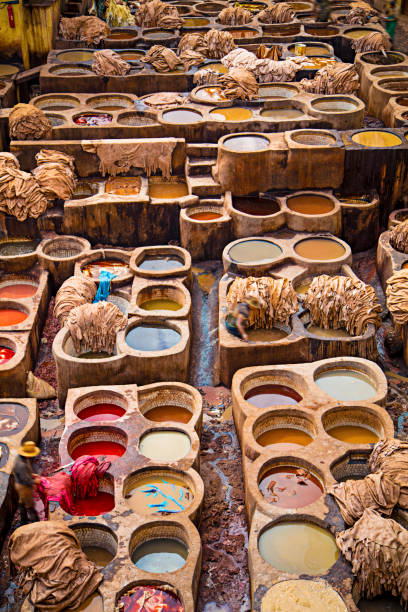
Your guide will then take you through the medieval medina on foot, where you can lose yourself within the labyrinthine streets. Discover the medina’s many artisans, such as metal workers, dyers, woodworkers, and silk weavers. Visit the tanneries where leather is processed in the way it has been done for centuries. Discover grand mosques and madrasas (Koranic schools), and learn about the ancient traditions of Berber medicine men. In the evening, continue your exploration of the city at your leisure, and enjoy dinner at one of the many restaurants, cafés, and bars.
Day 6: Cooking Workshop & Local Food in Fes
Morocco’s food is rich and diverse: the Mediterranean, Atlantic, and inland regions all have special flavors. This variety is reflected in the delicious local food offered in each region, with sumptuous spices and herbs combined to make a truly unique and tasty African cuisine. Walk to your cooking workshop, where your family will get the chance to cook your Moroccan meal and have lots of fun together in the process.
Day 7: Travel over the Atlas Mountains to Merzouga Desert Camp
Today, trade the bustling city life for an outdoor adventure in the Sahara Desert. After breakfast, head toward Merzouga, a place of important exchange between northern and southern Morocco for many centuries. If you have time, there are a few interesting stops to make along the way. You can see wild Barbary apes in their natural habitat, or stop in the mountain towns of Azrou and Ifrane, which are known as “the Switzerland of Morocco.” If you’re interested in learning more about nomadic life in Morocco, take a detour to the city of Erfoud.
Once you arrive in Merzouga, prepare for your camel ride through the desert. Your guide will provide you with all the clothing and equipment you’ll need and help you get acquainted with riding a camel. Once you feel comfortable, head to a viewpoint to enjoy the sunset. Then, make your way to your camp for the night, where dinner will be waiting for you in the restaurant tent. After dinner, sit outside your private tent and listen to the camp’s local musicians before falling asleep. You can play along with them or dance under the desert sky.
Day 8: Explore Todra Gorge
Rise early to be rewarded with a sunrise outside your Bedouin tent. Then, meet your driver and leave for Rissani, another market town with an impressive gate at its entrance. Continue through the desert, past oases, and palmeries, to the town of Tinerhir (Tinghir). You’ll be treated to a view of the nearby towns that cling to the side of the green river oasis, filled with palm trees. The surrounding desert landscape reveals impressive buttes, mesas, and plateaus.
Todra Gorge is a natural limestone gorge in the mountains of Morocco. Between the towering walls of the gorge is a dried-up river bed, meaning visitors can walk through the landscape most of the year. This is a favorite spot for photographers, hikers, and climbers. Check in at your accommodation and relax after a lovely drive through the Sahara.
Day 9: Drive to Aït Ben Haddou via Ouarzazate
Head to the city of Ouarzazate, a popular stopping point for travelers in the Sahara Desert, set in a beautiful valley at the foot of the Atlas Mountains. Its attractions include a historic 19th-century palace and a museum dedicated to the movies that have used the area as a filming site.
Continue driving toward the village of Aït Ben Haddou, which holds the UNESCO Heritage Site Ksar Aït Ben Haddou. With the help of some Hollywood touch-ups, this protected fortified village seems frozen in time, still reminiscent of the days when it was used as an Almoravid caravanserai (roadside inn and settlement). Movie lovers may recognize it from “Lawrence of Arabia,” “Jesus of Nazareth,” “Jewel of the Nile,” “Gladiator,” and—most recently—”Game of Thrones.” Walk to the top of the kasbah (fortification) to enjoy a breathtaking sunset.
Day 10: Head to Marrakech via the High Atlas Mountains
Set off on a drive through the High Atlas mountains. Go through the Tizi N’Tichka Pass, the highest major mountain pass in North Africa, and stop to look at Berber villages and take some breathtaking photos.
Soon, you’ll arrive in Marrakech, one of Morocco’s four imperial cities. With its bustling souks (markets), flavorful food, and famously welcoming hospitality, it’s no wonder that Marrakech, also known as the “Red City,” is becoming increasingly popular with tourists. It’s the fourth-largest city in Morocco and lies near the foothills of the snow-capped Atlas Mountains. Once you arrive, check in at your accommodation and relax before exploring Jemaa el-Fna Square. Marrakech’s main square is filled with activity—you’ll see acrobats, dancers, musicians, and storytellers performing there. The square fills up with dozens of food stalls in the evening, transforming into a huge open-air restaurant.
Day 11: Discover Marrakech with a Local Guide
Visit some of Marrakech’s beloved gardens. Your local guide will take you outside the old walls to visit the Agdal Gardens and the Royal Palace. Next, head to the Menara Gardens, filled with large olive groves, a water basin, and views across to the Atlas Mountains (on a clear day). Then, pass through Guéliz—the modern European quarter—to reach the Majorelle Garden, a well-planned botanical garden created in the 1920s by the artist Jacques Majorelle and now owned by the estate of Yves St. Laurent.
After exploring the gardens, return to the old medina, where you can continue on foot to discover historical palaces and museums. Visit the Bahia Palace, Saadian Tombs, and Koutoubia Mosque, and explore the famous souks. Grab dinner at a restaurant or café, and return to the city center to watch the nightlife unfold and entertain the kids.
Day 12: Relax in a Traditional Hammam
Hammams (traditional bathhouses) in Morocco are a unique way to experience the local culture. The country is home to many hammams, from the most traditional in the neighborhoods to the most luxurious in the big cities. Most hammams accept families with children, and your group will be separated by gender as you enter the bathhouse.
Start in a warm, dry room to relax and allow your body to get used to the heat before entering an even warmer room, and then a steam room. Your attendant will set aside your towel, and after a few minutes, you’ll be ready to start the next stage. The attendant will apply black olive-oil soap, known as savon beldi, to your body, and you will be scrubbed with a kessa loofah. Much rinsing and scrubbing will follow, helping you clean your skin and get the stress out. Remember the phrase “ghi bshwiya,” which means “a bit softly, please!”
At the end of your hammam treatment, go back to your accommodation to enjoy the rest of your day, or keep exploring the city with your family at your leisure.
Day 13: Transfer to Essaouira
The next day, head to Essaouira, a coastal city formerly known as Mogador. Situated on the Atlantic Coast, Essaouira is an 18th-century town enclosed by medieval-looking battlements, facing a cluster of rocky offshore islands.
The medina of Essaouira is UNESCO World Heritage-listed. Walk inside the medina, noticing the beautifully whitewashed, blue-shuttered houses and colonnades. The small fishing harbor remains functional today. Take the rest of the day to relax or do some shopping, enjoying the pleasant atmosphere, which is calmer than Marrakech.
Day 14: Enjoy the Coast in Essaouira
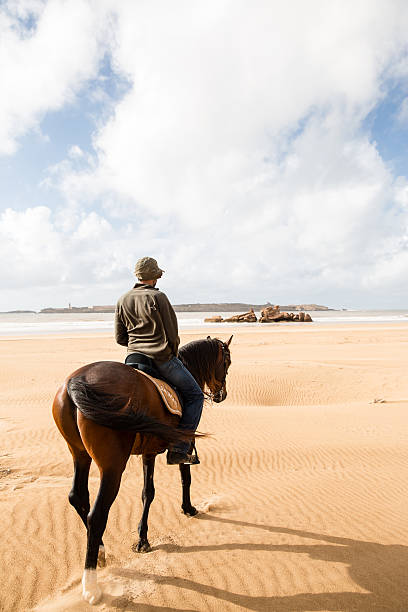
Use this free day to explore Essaouira. You can spend the day at the beach with your family, returning later to wander through the picturesque medina.
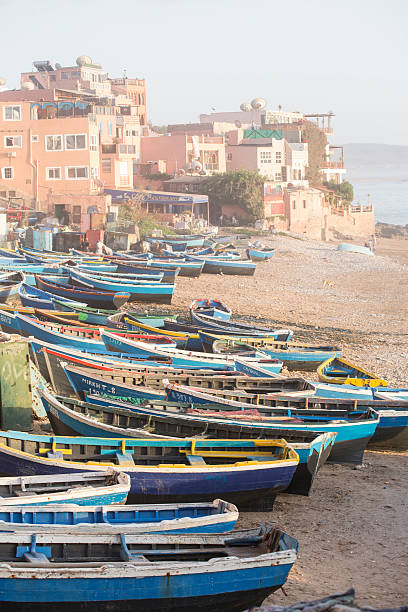
Essaouira was known as a mecca for hippies during the 1970s and is still an artists’ town today. Spend some time relaxing and taking photos in Moulay Hassan Square, the city’s central square lined with restaurants, cafés, and hotels. Later, go down to the port to admire the city’s blue wooden fishing boats and see the Portuguese Castelo Real of Mogador. Next, head to the mellah and stop at the Synagogue Haïm Pinto, named for a famous 18th-century rabbi, or wander over to one of the city’s fish markets to watch the fishmongers in action.
Day 15: Depart Marrakech
It’s time to say goodbye to Morocco! Spend your final morning wandering the streets of Essaouira and picking up some last-minute souvenirs in the souk. Later, a driver will pick you up at your hotel and drive you to Marrakech’s Menara Airport for your flight home.
Tour on Map
ACCOMODATIONS & ACTIVITIES
PRIVATE CAR TOUR ON CHOICE
Including Prestations
- Private Luxury Transportation Throughout The Tour
- PERSONALIZED, GUIDED TOURS IN KEY DESTINATIONS.
- All Accomodations are in single rooms
- 24/7 MLV On-Call Support
- Entrance Fees, Taxes and All Gratuities Except Resident Tour Director
- Internet access
- Airport Meet in Morocco and Greet with Private Transfers
- Meals ( not including)
- Travel insurance (Not including )
- Flights (Not including )
- 1 night on half board in Hotel HAYATT REGENCY PALACE
- 2 nights on half board in HOTEL TAJJ PALACE
- 3 nights on half board in Hotel RIAD FEZ and SPA PALACE
- 1 night on half board in Camp Kalimba Desert
- 1 night on half board in Hotel Xaluca Dades
- 1 night on half board in OZ HOTEL PALACE
- 3 nights on half board in HOTEL PALACE LE ROYAL MANSOUR
- 2 nightS on half board in HOTEL SOFITEL PALACE
PRICES & AVAIBILITIES
FROM 17 APRIL TO 15 JUIN
FROM 16 JUIN TO 20 OCTOBER
FROM 21 OCTOBER TO 15 DECEMBER
FROM 16 DECEMBER TO 15 FEBRUARY
YOU MAY LIKE ALSO


FAQ
Whether you need a visa depends on your nationality. You can submit and track applications for E-Visa or AEVM (Electronic Travel Authorizations to Morocco) through the Acces Maroc portal.
The maximum duration for a tourist trip is 90 days. If you need to stay longer, you can request an extension at the nearest police station for an additional 90 days.
If you’re part of an organized trip, your passport must be valid for at least the duration of your stay. Always ensure your passport is valid to avoid any inconvenience upon arrival.
Currency exchange is available at airports, banks, hotels, and city exchange offices. You’ll need to present your passport for the transaction.
Yes, international credit cards such as Visa and MasterCard are widely accepted in hotels, some restaurants, shops, and petrol stations. ATM machines for cash withdrawals are also widespread in Morocco.
Yes, you can find internet access at cafes, hotel lobbies, and occasionally free Wi-Fi in public areas. However, internet access in rural areas can be limited. A smartphone with the right plan can provide connectivity almost everywhere.
Both modern flushable toilets and Turkish toilets are available. Tours often aim to visit places with modern facilities.
No, it’s advised to drink bottled water and avoid using tap water for drinking or brushing your teeth. Bottled water is typically provided.
ATM machines are common in airports, metropolitan areas, and medinas but are rare in rural areas. Carry enough cash when traveling outside cities.
Public holidays vary annually due to the lunar calendar. Key holidays include:
- New Year’s Day: January 1
- Independence Manifesto Day: January 11
- Milad un Nabi (Prophet’s Birthday): Varies
- Labor Day: May 1
- Throne Day: July 30
- Eid al-Fitr: Varies
- Eid al-Adha: Varies
- Independence Day: November 18
Yes, Morocco prioritizes the safety of its visitors. To avoid issues, choose a reliable travel company and avoid suspicious places. Local authorities and police are available in tourist areas to address any concerns.
When visiting Morocco, wearing pants and a shirt is common and appropriate, as most locals dress this way. In rural areas, long pants and a long-sleeved shirt can offer protection from the sun and wind.
Pack essential items such as a hat, sunglasses, sunscreen, and insect repellent. Comfortable footwear is vital for extended walking. Consider bringing the following:
- Shawl or scarf: Useful as a wrap, headscarf, or sun shield.
- Comfortable shoes and sandals: A pair for all-day wear and flip-flops or lightweight sandals for comfort.
- Loose-fitting clothing: Choose lightweight, breathable fabrics to stay cool. Avoid tight clothing, and opt for tops with short sleeves or sleeveless styles.
Adapt your wardrobe to the season: layer in winter and opt for light outfits in summer. For formal occasions or upscale dining, bring appropriate attire like a dress or suit.
Yes, alcohol consumption is allowed in licensed venues such as hotels and restaurants. However, drinking in public places and transporting alcohol across the border is prohibited by law. As Morocco is a Muslim country, these restrictions align with local customs and regulations.
It’s challenging to obtain Moroccan Dirham outside the country as it’s a closed currency. Those who manage to do so often face high bank commissions. Once in Morocco, you’ll find ATMs, exchange points, and banks widely available. Many businesses, shops, and restaurants accept credit cards, though a 5% transaction fee is often applied.